Michael Faraday: The Genius Who Discovered Modern Electricity
3 min read
Michael Faraday (1791-1867) was a British physicist and chemist who made important contributions to electricity and magnetism, as well as being one of the greatest experimental scientists in history. He was born on September 22, 1791, in Newington, England, to a poor family.
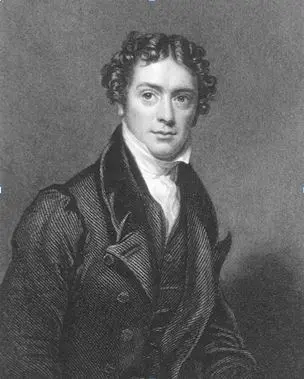
Early Career of Michael Faraday
Faraday received little formal education and began working as a bookseller's apprentice when he was just 14 years old, during this time he developed a keen interest in science and began attending scientific lectures whenever possible. In 1812, Faraday got a job as an assistant to Humphry Davy, the famous British chemist. Davy was a great influence on Faraday's life and encouraged his scientific interests. Faraday worked for Davy for several years and became one of his closest collaborators.
Experiments with electricity and magnetism
In 1821, Faraday began carrying out experiments with electricity and magnetism and discovered electromagnetic induction. He showed that a moving magnetic field could produce an electric current in a nearby circuit. This discovery was an important milestone in the history of electricity and paved the way for the development of electrical generators.
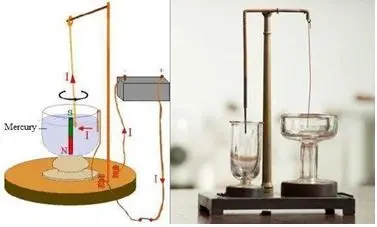
Michael Faraday also discovered the phenomenon of diamagnetism, in which certain materials are repelled by magnetic fields. Furthermore, he discovered the laws of electrolysis, which establish the relationship between electric current and the amount of substance produced or consumed in a chemical reaction.
Faraday also studied the nature of light and discovered that the polarization of light could be produced by magnetic fields. He also carried out research into the nature of diamond and showed that it is composed entirely of carbon.
In 1831, Faraday was elected a Fellow of the Royal Society of London, and in 1833 he was appointed Director of the Royal Institution. He also received many honors throughout Europe and was knighted by the British government.
Faraday continued to make important contributions to science until the end of his life. He died on August 25, 1867, in Hampton Court, England, after a long battle with illness.
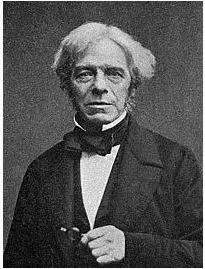
Faraday's work influenced many scientists who came after him, including James Clerk Maxwell, who used Faraday's ideas to formulate the equations of electromagnetism. Faraday is remembered as one of the greatest experimental scientists in history and his influence on physics and chemistry continues to be felt today.
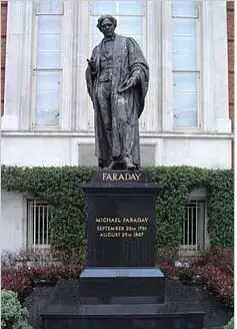
Chronology
- 1791: Michael Faraday is born in Newington, England
- 1805: At age 14, he becomes an apprentice bookbinder
- 1812: Starts working as assistant to Humphry Davy
- 1821: Discovers electromagnetic induction and creates the first electric motor
- 1823: Performs the first gas liquefaction experiments
- 1831: Officially discovers electromagnetic induction
- 1832: Formulates the laws of electrolysis (Faraday's Laws)
- 1833: Appointed director of the Royal Institution
- 1836: Discovers the phenomenon of diamagnetism
- 1845: Discovers the Faraday effect (rotation of the plane of polarization of light)
- 1857: Refuses the presidency of the Royal Society for health reasons
- 1867: Dies in Hampton Court, England, aged 75