The History of the Construction of the Rio–Niterói Bridge
7 min read
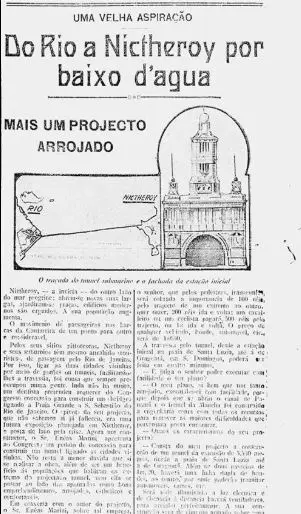
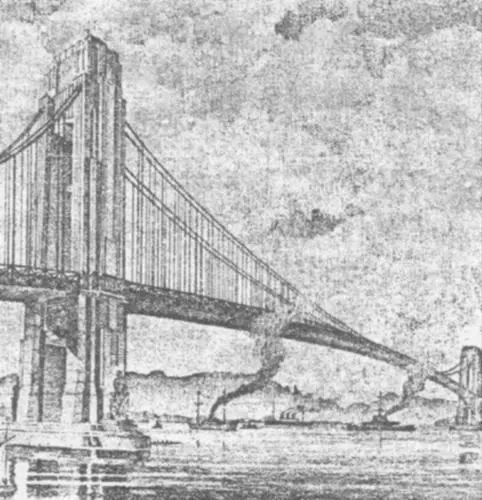
Old reports state that the Rio-Niterói Bridge project dates back to 1875, with the aim of connecting the city of Rio de Janeiro to the municipalities that were on the north coast of the state, on the other side of Guanabara Bay. Dom Pedro II even hired the English engineer Hamilton Lindsay-Bucknall to carry out studies on the feasibility of the work. Initially, the interconnection would be through a long tunnel under the waters of Guanabara Bay, using the London Underground works as a reference. Years later, the option of building a bridge connecting the two cities was presented.
Newspapers at the time indicated that it was a “huge undertaking, whose advantages are indisputable”, but that, due to the great difficulty of execution and high expenses, the bridge was considered impractical.

The idea was put aside for a few years, but it was not completely forgotten. There are numerous reports of conversations between authorities and businesspeople, as well as proposals on the topic in the first half of the 20th century.

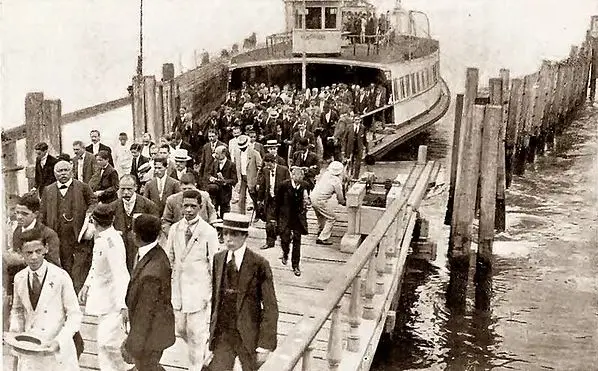
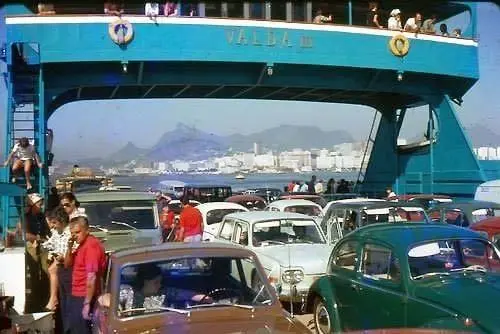
In the 1960s, the work became a necessity after the car fleet increased significantly, and the flow of people leaving the capital of Rio de Janeiro towards the northern region of the state intensified. Before the bridge was inaugurated, anyone who wanted to cross Rio-Niterói by car needed to go around Guanabara Bay or take a barge, which carried 54 vehicles at a time. Between waiting in line, boarding, crossing and disembarking the vehicle, the journey across the sea took up to two hours.
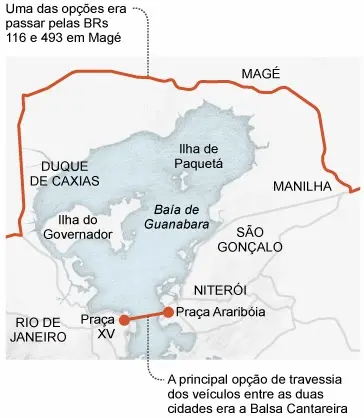
The other was to go around the Bay on a road more than 100 kilometers long, crossing the city of Magé, and only then reaching Niterói
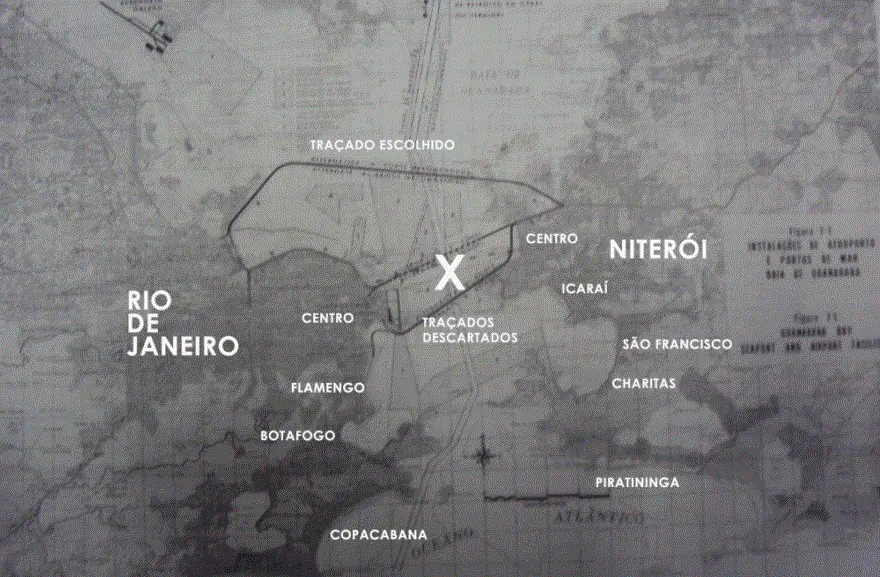
Several proposals for the bridge were studied before the federal government, responsible for the work, dropped the hammer. One of the possible routes was shorter, but passed close to the airport, forcing the bridge to be a maximum of 50 meters high, which would hinder the flow of large ships. There was also an option that made navigation easier, but with a longer route than the one finally approved by the government.
On December 29, 1965, an executive committee was formed to take care of the definitive project for this construction.
The official presentation of the Rio-Niterói Bridge project took place on November 14, 1968, at the School of Engineering of the Catholic University of Petrópolis (UCP). Work began in January 1969.
There were many difficulties in carrying out this work.
The first of these was to ensure that the ocean rocks at the bottom of Guanabara Bay would support the weight of the structure.
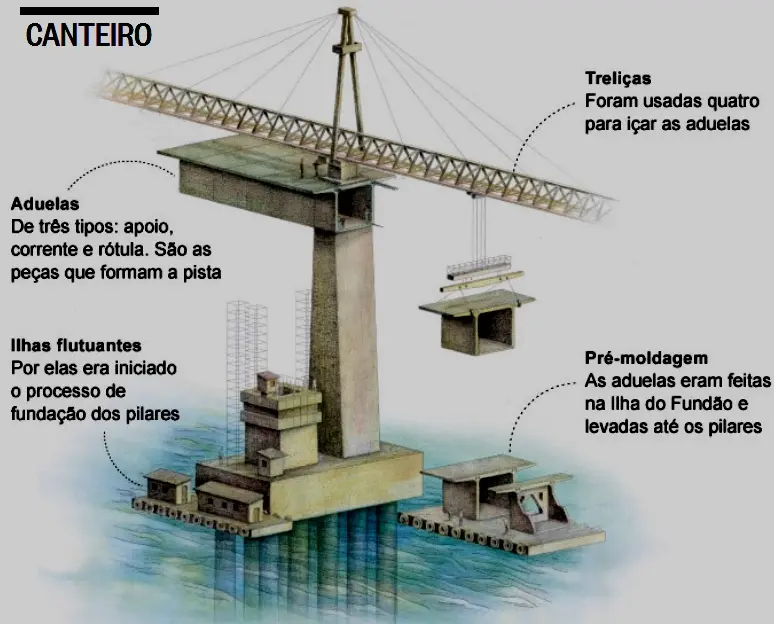
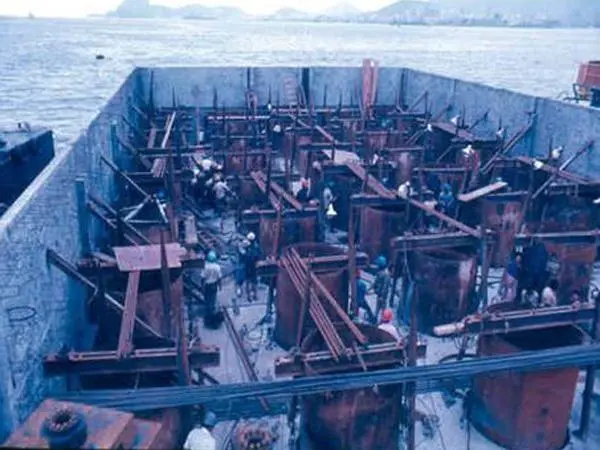
From there, the foundations of the bridge were built with the help of floating islands, which carried drilling equipment from the ocean floor. The large drills worked inside tubes that protected them from seawater. The excavations had to reach sections of solid rock capable of supporting the bridge's foundations. Long metal pipes (filled with concrete) were then installed in the holes that went from the oceanic subsurface to the sea surface.
There were many difficulties in carrying out this work.
The first of these was to ensure that the ocean rocks at the bottom of Guanabara Bay would support the weight of the structure.
From there, the foundations of the bridge were built with the help of floating islands, which carried drilling equipment from the ocean floor. The large drills worked inside tubes that protected them from seawater. The excavations had to reach sections of solid rock capable of supporting the bridge's foundations. Long metal pipes (filled with concrete) were then installed in the holes that went from the oceanic subsurface to the sea surface.
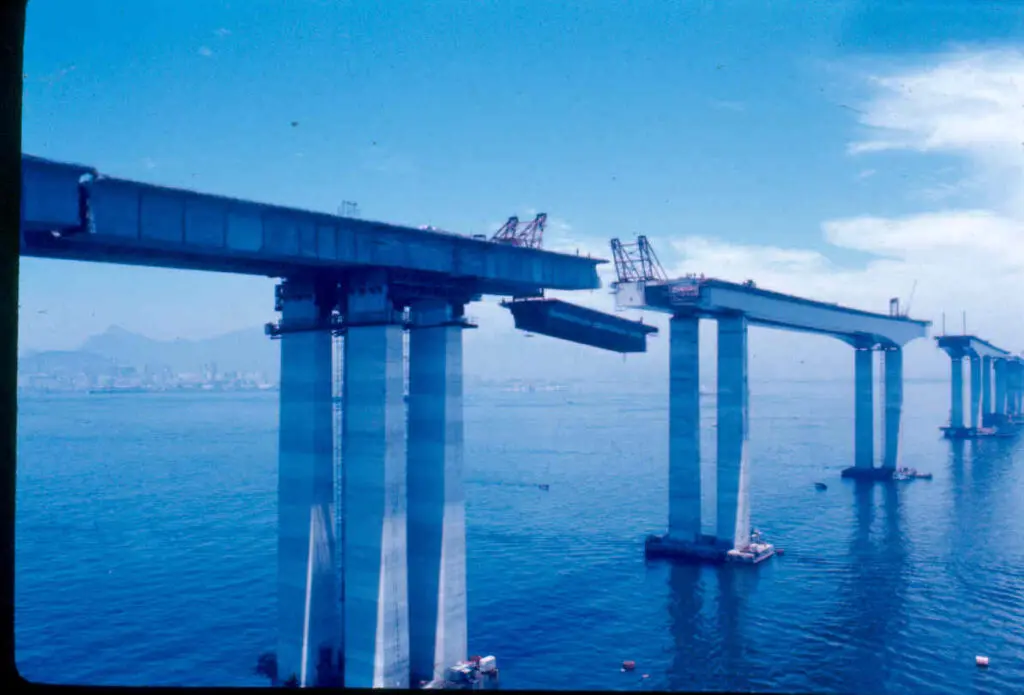
Using cranes – which were supported at the base of the pillars – the pre-cast structures that formed the two lanes of the bridge were erected. These pieces, called staves, which were made of concrete and were 5 meters long and weighing 110 tons each, were fitted together.
As the staves were difficult to install in very wide spans, they were not used in the central part of the bridge, which needed to have a greater distance between the pillars for large ships to pass. The solution was to use gigantic metallic blocks that, combined, reached 850 meters.
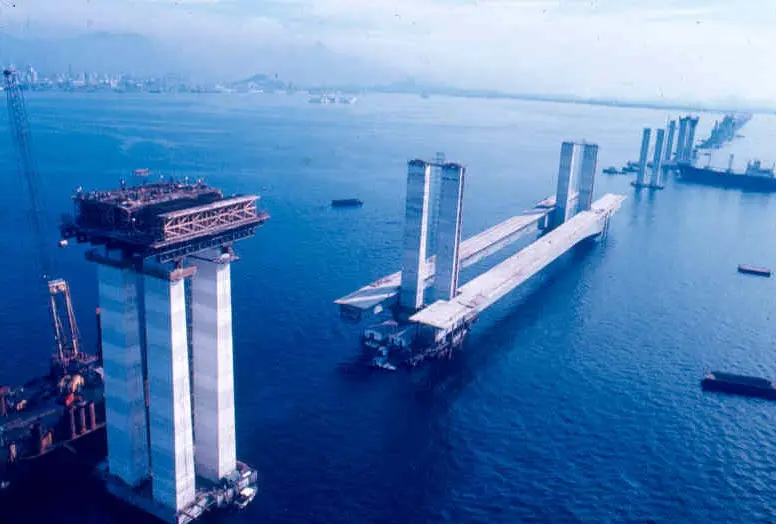
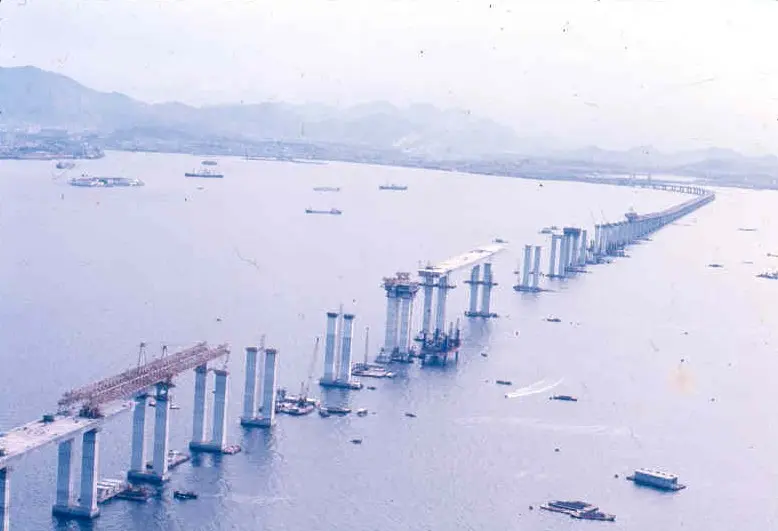
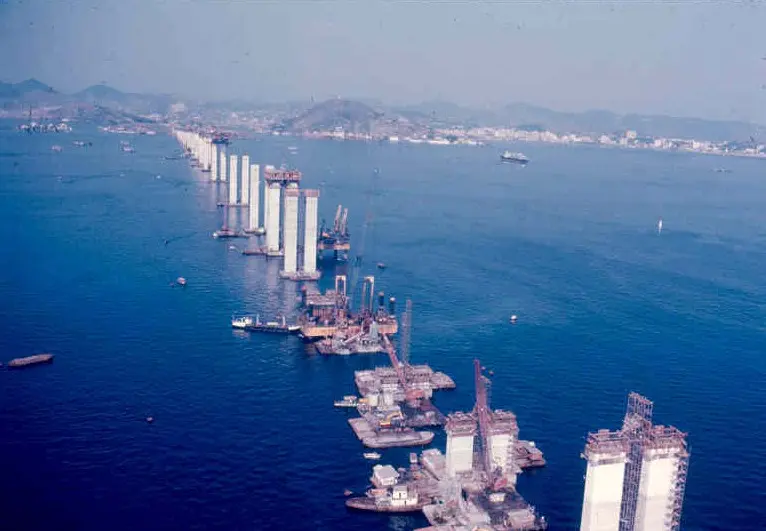
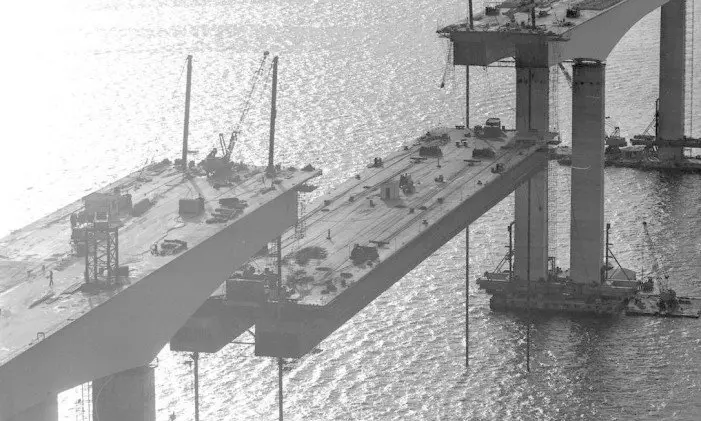
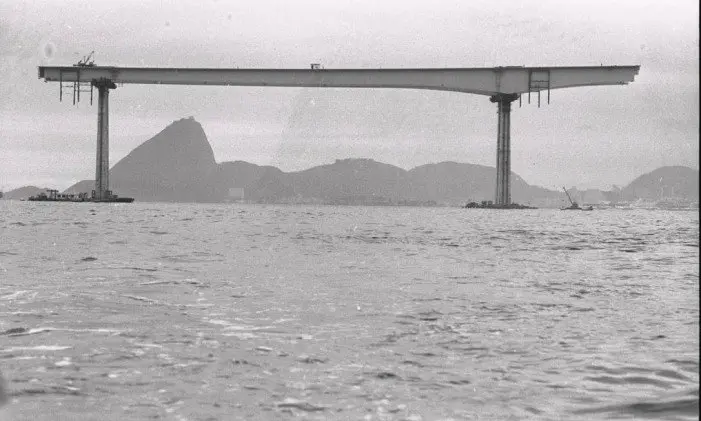
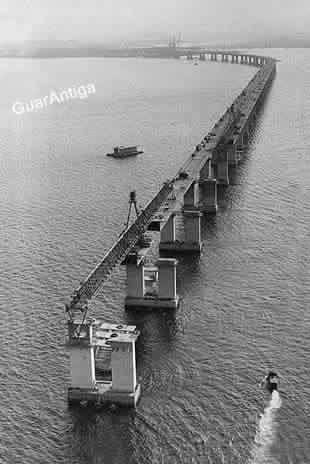
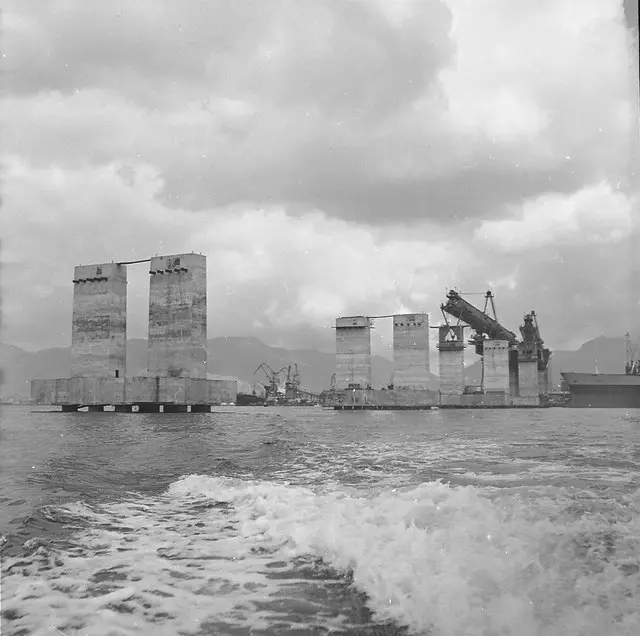
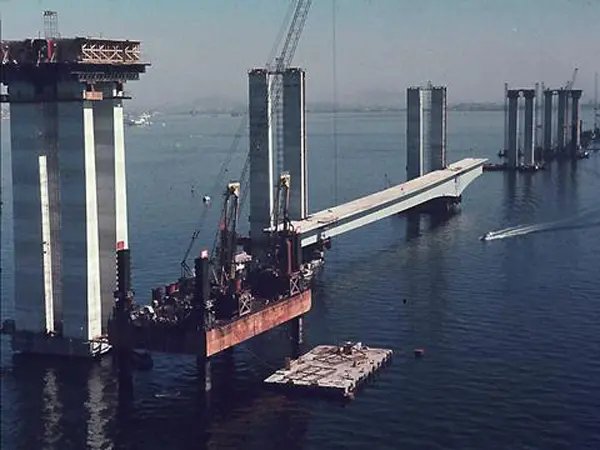
The unfortunate fact is that, according to newspapers and magazines at the time, 32 people died during the construction process, although the number is believed to be much higher.
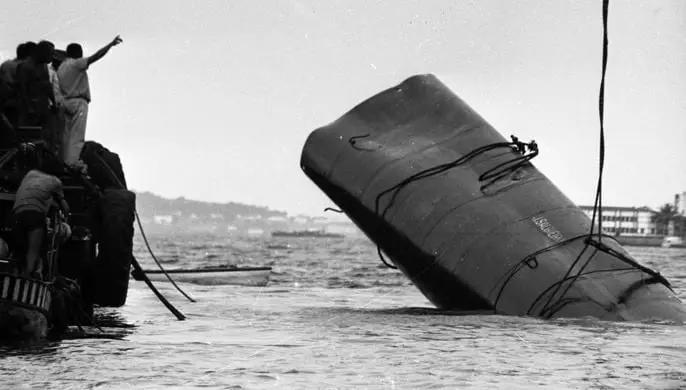
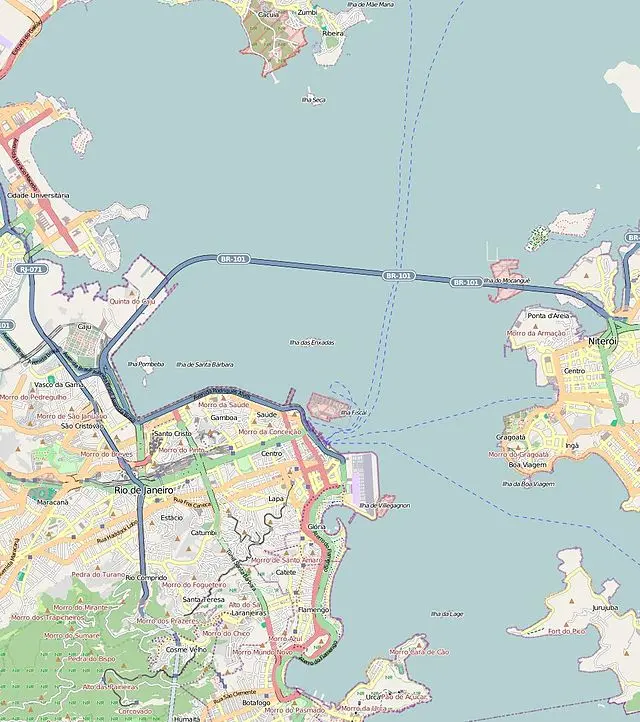
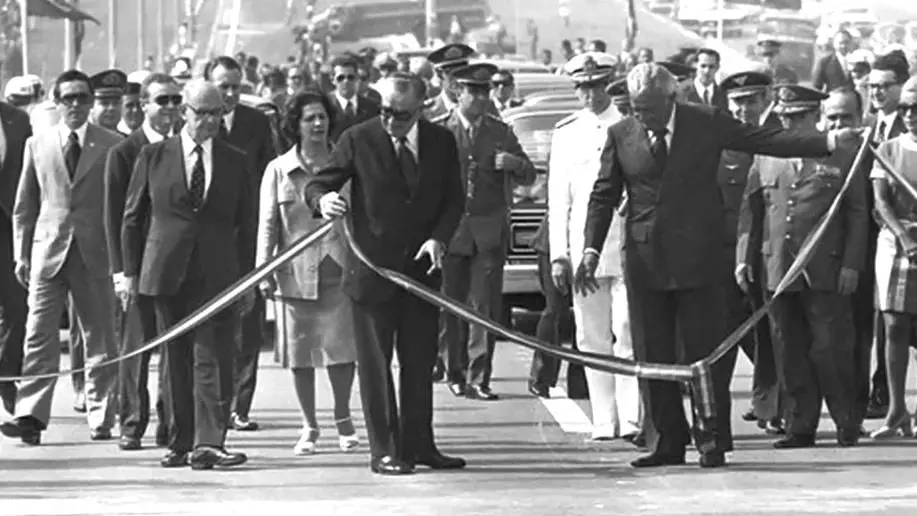
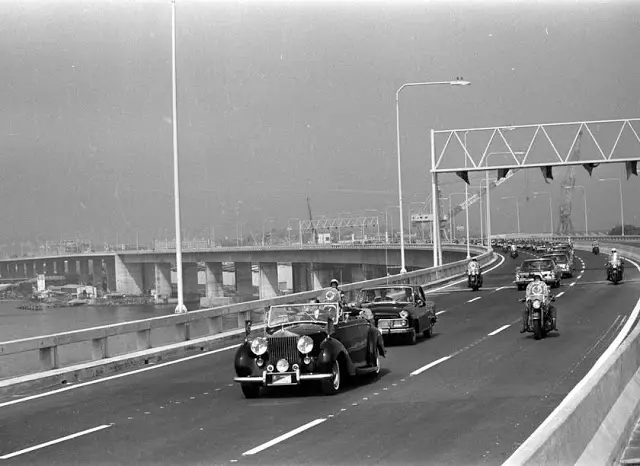
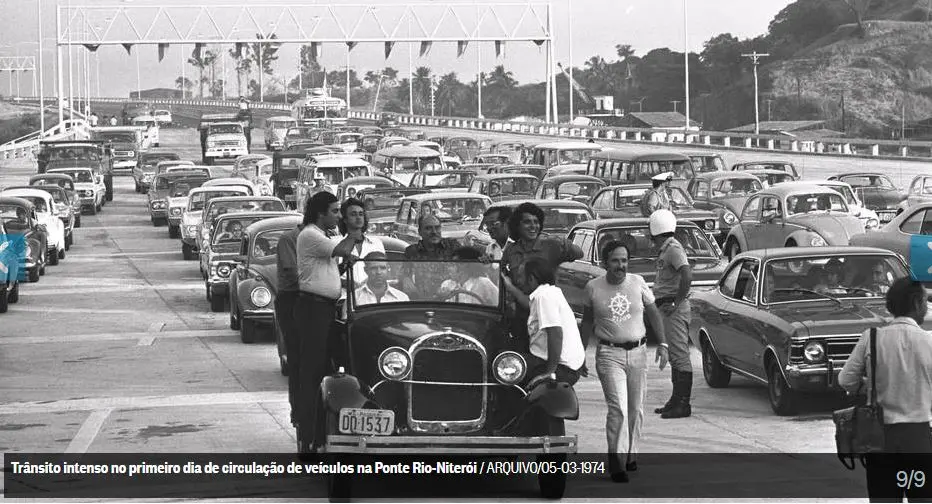
The work, whose official name is Ponte Costa e Silva, with its 13.29 kilometers long – 8.83 of which are over water – and 72 meters high at its highest point, the Rio-Niterói is the largest bridge in the Southern Hemisphere. Such work took six years to complete. Construction began in 1968 and the inauguration in 1974, making a 19th century Brazilian dream come true.
In 2004, following a suggestion from the Federal University of Rio de Janeiro (UFRJ), a system of attenuators was adopted to solve a problem of more than normal oscillation when speeds exceeded 55 km/h.
Timeline:
- 1875: Dom Pedro II hires an English engineer to propose a solution to connect the city of Rio de Janeiro to Niterói;
- 1963: Creation of a working group to study the construction of a connection between cities;
- 1965: Executive committee formed to take care of the bridge construction project;
- 1968: Authorization of the construction of the Rio-Niterói Bridge and presentation of the final project;
- 1969: Construction begins;
- 1974: Inauguration of the bridge.
Curiosities
Its concrete structure took enough cement to build eight stages the size of Maracanã. Its iron beams, if they were aligned, would complete an entire lap around planet Earth.
The bridge has 11 power substations, 42 transformers, 980 lighting points and 400 nautical and aerial signaling points.
The work to build the bridge cost, at the time, US$400 million, which today would make a fortune of US$2.5 billion. Around 10,000 workers and 200 engineers worked to put the structure upright.
The structures that supported the runways took four days to be erected by cranes. During all this time, the work needed to be closely watched and monitored, as the huge pieces contracted and expanded in size due to temperature variations.
The engineers then followed the calculations through a panel until the structures were fitted and welded together.
Another difficulty solved by engineering and technology was the height of the central span, greater than the rest of the structure, to allow large boats to move under the bridge. Its highest point is 72 meters above sea level.
The entire structure that was used in the construction of the Rio-Niterói Bridge was manufactured in England in modules that arrived in Brazil by sea. This import was quite difficult, due to the movement in Guanabara Bay.